
Introduction
Few rivers in the world can match the cinematic majesty of the Danube, especially as it winds through the heart of Budapest. Its shimmering waters, framed by neo-Gothic and neoclassical architecture, have become a visual centerpiece in numerous international productions. Whether capturing elegant establishing shots, tense chases, or atmospheric transitions, the Danube has helped shape the tone of global blockbusters and prestige dramas alike.
A Natural Landmark with Cinematic Gravitas
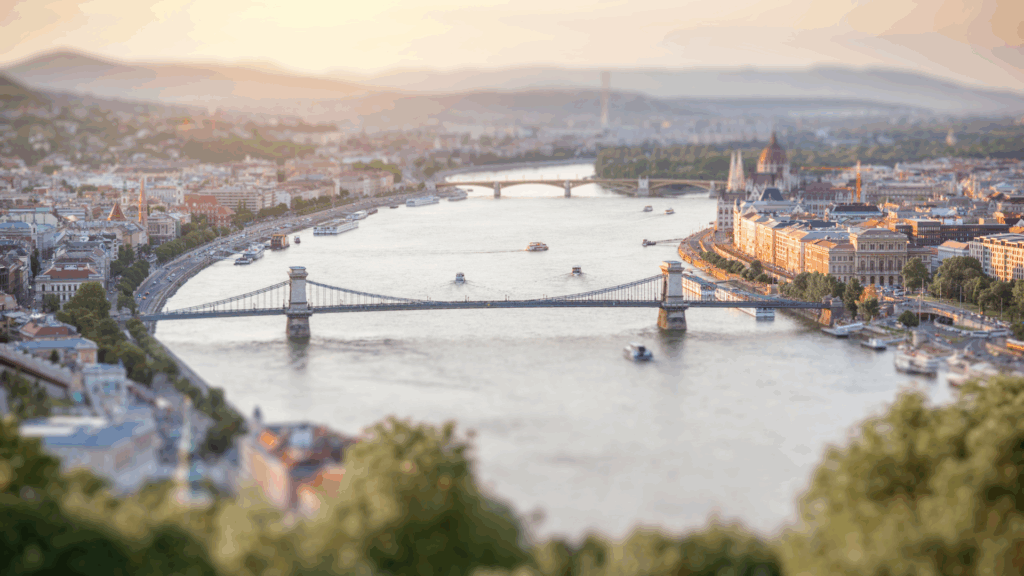
The Danube’s iconic presence in Budapest is flanked by architectural marvels on both sides: the Hungarian Parliament Building to the east, Buda Castle to the west, and the Chain and Liberty Bridges spanning its breadth. These elements combine to offer directors a 360-degree cinematic canvas—particularly striking at dawn and dusk when the river reflects the city’s golden hues.

Spy (2015): Comic Action with a Scenic Backdrop
Paul Feig’s Spy (2015), starring Melissa McCarthy and Jude Law, made heavy use of the Danube and its surrounding landmarks. The film’s comedic chase scenes traverse several of Budapest’s bridges, with the Danube always in the frame. One of the key sequences—featuring a high-speed scooter pursuit—takes place along the Danube promenade, capturing both the river and Liberty Bridge. The juxtaposition of slapstick action with majestic surroundings heightened the film’s visual humor.
Mission: Impossible – Ghost Protocol (2011): Iconic Aerials
Though set primarily in various global locales, Mission: Impossible – Ghost Protocol included breathtaking aerial footage over Budapest, particularly highlighting the Parliament building at night reflected on the Danube. These wide establishing shots were instrumental in introducing the city with gravitas and intrigue, even if only briefly featured.

Gemini Man (2019): Modern Thrills Against a Timeless Backdrop
Ang Lee’s Gemini Man (2019), starring Will Smith, transformed the riverbanks into an urban battlefield. In one of the film’s central chase sequences, Will Smith’s character navigates through streets parallel to the Danube, eventually culminating in a confrontation near the Chain Bridge. The tension of the scene is amplified by the historic grandeur of the setting—marrying cutting-edge visual effects with timeless architecture.
The Raven (2012): Grit and Fog on the Water
In James McTeigue’s The Raven, which fictionalizes Edgar Allan Poe’s final days, Budapest played multiple European cities, and the Danube provided a moody, atmospheric setting for scenes involving fog-drenched waters and grim discoveries. The filmmakers used the river’s natural mystique to heighten the Gothic tone of the thriller.
Red Sparrow (2018): Chilling Elegance
In Red Sparrow, the Danube again stands in as part of Moscow’s riverfront. The film uses several riverside buildings and bridges to portray Eastern Europe’s cold, authoritarian aesthetic. Through digital alterations and strategic framing, the Danube appears as a shadowy artery through which secrets and power flow.
A Magnet for Commercials and Television
Beyond feature films, the Danube frequently appears in luxury car commercials, tourism campaigns, and international television productions. Its instantly recognizable views—particularly the Parliament lit at night—lend an air of sophistication and drama. Budapest-based production companies often highlight the Danube’s value in location decks pitched to foreign producers.

Why the Danube Works on Screen
Several factors contribute to the Danube’s enduring cinematic appeal:
- Visual Depth: The river offers natural symmetry and compositional balance.
- Geographic Variety: From tranquil stretches to bustling urban sections.
- Light and Reflection: The river amplifies Budapest’s golden hour aesthetic.
- Cultural Ambiguity: It can easily double for Vienna, Moscow, or generic “Old Europe.”
Filmmakers across genres—from espionage thrillers to romantic dramas—leverage these traits to add texture and scale to their stories.
Conclusion
The Danube is more than a backdrop; it’s a cinematic character in its own right. In Budapest, it brings emotional weight, aesthetic richness, and geopolitical subtext to any scene it graces. As filmmakers continue to seek authentic yet versatile European locations, the Danube’s role in global productions is certain to flow on.

