
When Red Sparrow (2018) needed to recreate the shadowy world of Russian espionage, its filmmakers turned not to Moscow—but to Budapest, Hungary. With its grand 19th-century architecture and lingering Soviet-era details, the Hungarian capital convincingly doubled for the Russian capital and other European cities, offering a flexible, film-friendly alternative to shooting in Russia itself.
Budapest as Moscow: A Cold War Illusion
Though not its first espionage role, Red Sparrow marked Budapest’s most immersive turn as Moscow to date. The production shot extensively on location across the city, transforming well-known Hungarian landmarks into convincing Russian counterparts. According to the filmmakers, certain elements of the script were even rewritten to include Budapest as itself, after they were won over by its atmospheric streets and cinematic potential.
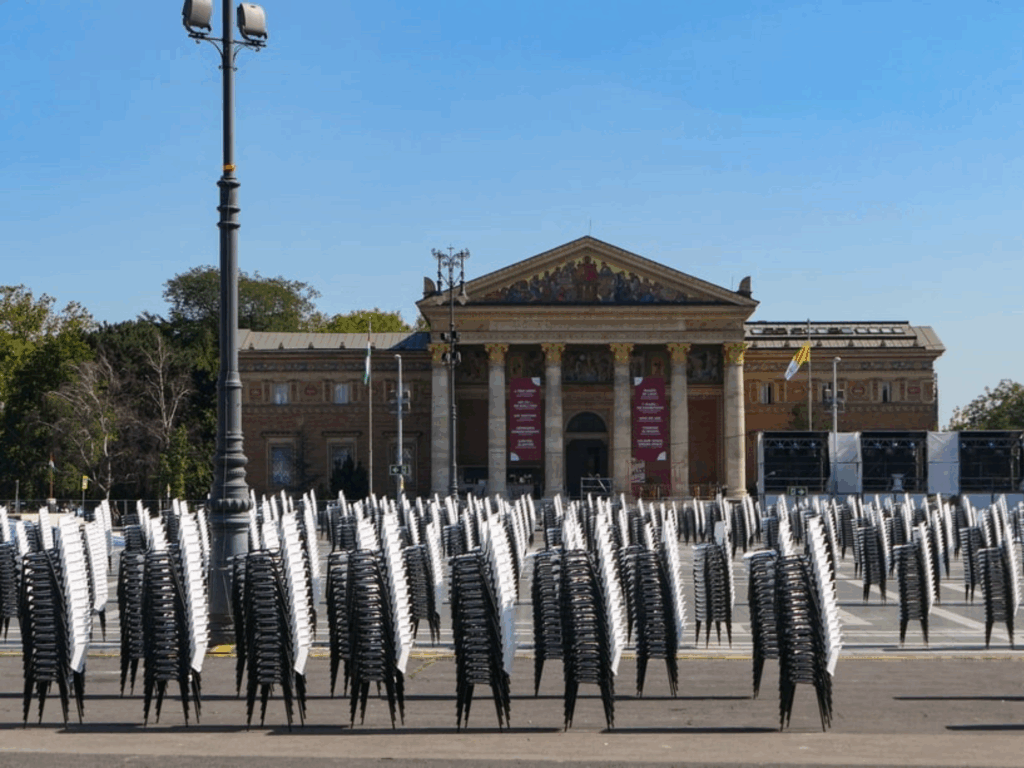
One of the film’s opening scenes—a ballet performance at the Bolshoi Theatre—was actually filmed at the Hungarian State Opera House on Andrássy Avenue. With its ornate interior and gilded balconies, the Opera House required only minimal set dressing. Other iconic Moscow stand-ins included Heroes’ Square, which was digitally altered with Soviet monuments, and the Boscolo Budapest Hotel (featuring its lavish New York Café) which played host to a key underworld meeting. The Lotz Hall—a Neo-Renaissance gem inside a university library—was redecorated to stand in for the interior of a Russian embassy.
This creative location use allowed the filmmakers to blend fiction and reality, with Budapest portraying not only Moscow and Helsinki, but eventually appearing as itself by the film’s final act.
A Production-Friendly Capital
Budapest’s appeal went beyond aesthetics. Producers emphasized the city’s film-friendly policies, low costs, and efficient permitting process, all of which contrasted sharply with the difficulties of shooting in modern-day Russia. “Suddenly all these things that were proving difficult, if not impossible, to get in [the real] Moscow… in Budapest, we were given options that were incredible,” one producer remarked.
The city’s Soviet architectural legacy—broad boulevards, Brutalist buildings, and imposing monuments—helped reinforce the illusion of Cold War Russia. But the real secret weapon was Budapest’s adaptability: its ability to morph from imperial grandeur to Soviet austerity, from Western café culture to Eastern Bloc secrecy.
Even decades earlier, Arnold Schwarzenegger, while filming Red Heat (1988), praised Budapest’s cinematic flexibility. “It’s a beautiful town,” he said, joking that its Austro-Hungarian roots make it feel “like it should reunite with Austria.” That blend of East and West has continued to serve international productions seeking a credible, versatile European backdrop.
More Than a Stand-In
While Budapest substituted for other cities throughout Red Sparrow, the film also paid homage to its host. A few scenes were explicitly set in Hungary—a rare example of a city playing both itself and others in the same film. This creative decision gave the city its own narrative presence and highlighted its unique contribution to the film’s tone and authenticity.
With just a few visual tweaks—Cyrillic signage, red flags, and strategic lighting—Budapest became Moscow. But more than that, it became a case study in location alchemy, showing how one city can play many parts on screen when guided by smart production design and rich historical texture.
References

